
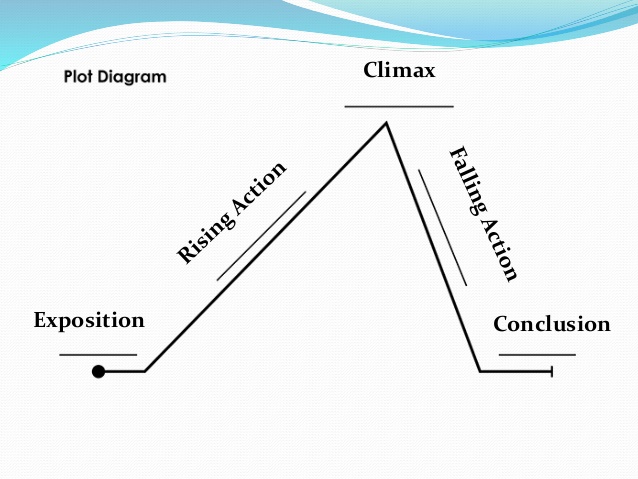
One of my first blogs, Plotting a Plot: More than just a Tongue-Twister, discussed the plot diagram and the instrumental role it plays in mapping out a story. Rising action comprises the brunt of it, which emphasizes the need for the plot to gradually gain momentum as it builds toward the climax. Does that mean, though, that a writer needs to constantly have underlying suspense to drive it forth?
Every writer has his/her own style, and of course, a lot hinges on the story’s genre. Obviously, thrillers run off of suspense, and anyone who picks up a thriller novel craves just that. Even romances can feature a level of suspense, although it typically revolves around whether or not an argument will end a relationship instead of whether bullets will start flying…with most couples, anyhow!
As is the case with any writing device, suspense can become a crutch if we’re not careful, and that could cause it to defeat its very purpose of engaging readers. How? Think back to the childhood fable, “The Boy Who Cried Wolf”. Because he kept pretending to be in danger, nobody believed him when he truly needed help. His frequent and phony outbursts grew into a drone to people’s ears, making them uninterested—and annoyed—by the time they needed to spring to action.
Likewise, if an author repeatedly has a character notice a menacing shadow, only to discover it’s just a plant, a reader may lose fascination with the story. Don’t get me wrong, I love red herrings and feel they enhance a mystery in particular. Just the same, our readers may get aggravated if we develop a pattern of portraying that the plot’s going somewhere and then make the scene worthless in the end. While we can get away with one or two of these occasions especially early on, we might consider adding a little bit of truth in each misdirection so as to prompt a reader to pay keener attention.
In my opinion, the master class in suspense is the classic movie “Jaws”. Its iconic two-note theme song didn’t play all the time, but when it began, you sat up in your seat. Then, you straightened your posture as it built and built to its crescendo, knowing what was going to pop out of the water. Unlike how the song is often now used in joking ways, Spielberg never disappointed, having an otter appear rather than a shark.

Our books may not feature background music to steer our audience’s feelings, but with some practice, we can develop techniques that similarly draw them in. More importantly, we’ll learn when to use them. Just like “Jaws” didn’t have a shark attack in every scene, we shouldn’t roll off one suspenseful moment after another. If we employ suspense just right, we’ll keep readers invested and amused from beginning to end.
With a book trailer, on the other hand, feel free to pile on the suspense! Check out my latest one for my upcoming novel, Accidental Allies.
 KarinaBartow.com