
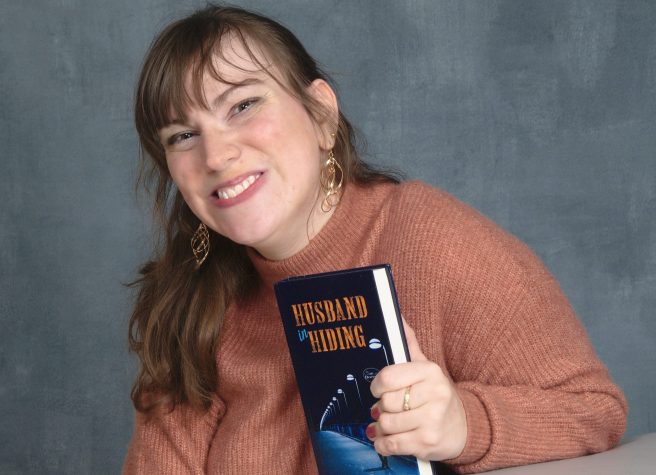
2025 marks ten years since I became a published author, with my debut novel, Husband in Hiding, being accepted in June 2015 and released that December. The year as a whole was defining for me both personally and professionally. To commemorate the ten-year anniversary of it, I’ve decided to begin a bi-monthly series to provide a Behind the Pages window into that experience and what it taught me.
From an early age, I was reluctant to set deadlines for personal achievements. Having Cerebral Palsy, I’d get disappointed by my failure to reach a certain benchmark at a specified time. I took the same approach when it came to my pursuit to be published, realizing that it took time, even for the most famous writers.
Since I started so young, however, my patience grew thin after I’d been at it for almost six years and composed three manuscripts. During 2014, I queried over half of the 120 agents and publishers I had to before landing an acceptance, and at the start of 2015, I had no prospects.

For a while before that, I tossed around the idea that I would consider self-publishing if I hadn’t secured a deal by the time I turned twenty-five, which seems silly now. At the time, however, I realized my peers who attended college had graduated and were settling into life, so I wanted to keep up. Having passed on the decision to further my education, I had something to prove.
Ironically, I was invited to listen to a webinar about self-publishing days after I hit the big 2-5. I welcomed the chance to learn more about it so I could determine whether or not it was for me. Back then, the industry was changing into what it is today, with Amazon and other companies getting into print-on-demand rather than forcing the author to buy a garage full of boxes of books on which you may never break even.
One of the speakers had been published both by a traditional company as well as through a self-publishing service. I appreciated her experience, and the fair pros and cons she could highlight. She projected that before long, writers wouldn’t even be distinguished between traditionally published and independently published because of the strides in the self-publishing world. She also touched on a major concern of mine: marketing. From her experience, she brought out that even major companies didn’t always have a grand marketing team that would promote your book for you. Thus, that fact alone evened the scales a little more for me.
That said, I still had some doubts and insecurities about taking that step. For one thing, I wanted professional editing, and I stand by that decision to this day. I appreciated the benefits of such, especially given my lack of experience, and I wanted my story to be as polished as possible for readers. Unfortunately, however, editing costs can wrack up if you have to hire a freelancer; back then, I estimated that I would have to pay out around $700.
Along with that, I wanted a professional cover made. I hadn’t honed my graphic making skills very much yet, and despite the old adage, “Don’t judge a book by its cover,” people judge a book by its cover! I knew the cover of my debut novel could kill my career on arrival if it didn’t turn out well. Again, though, it came with a high price tag, especially at that time.
Because of these factors and more, I ultimately decided to give my dream of traditional publishing another few months, at least. I dug in my heels some more, and I subscribed to a monthly service—which is no longer available—called Writers Market. For a low monthly fee, the website gave aspiring authors like me access to listings of publishers and agencies that were currently seeking new stories. Though many of them were small companies, I found it more worthwhile to seek out ones that had active calls for submissions instead of the bigwigs that had the all the clients and authors they wanted…not to mention the fact that they probably wouldn’t take on a newbie, anyhow.
I’ll refrain from getting ahead of myself, but this decision proved to be one of the best of my early career. It taught me that even if I couldn’t invest much money in my pursuit, a little can go a long way. I also learned the value in being realistic with yourself, yet the power you can find by cultivating patience and maintaining belief in your talent.
Little did I know that I would achieve my goal of being published at twenty-five…but there were also unrelated challenges that would appear in my path along the way.
Up Next>
Defining a Decade: The Unexpected Climb
 KarinaBartow.com
2 thoughts on “Defining a Decade: The Path to Publication”