
A highlight of my summer this year was my family’s vacation to Michigan. As an Ohio native, I garner some scowls from hearty Ohio State Buckeye for admitting we visited our northern neighbor by choice! Beyond the sports rivalries between us, though, The Great Lakes State is a natural beauty. One of the stops we made was in the Upper Peninsula at a park called Pictured Rock, a name that perfectly reflects the picturesque view of the land formations carved in the midst of Lake Superior.







While I could go on and on about all of the incredible settings, one site in particular rapt my attention, despite its lackluster appearance compared to the wonders around it. Along the boat tour we took, we came upon a single tree standing atop a sandstone formation named Chapel Rock. At first glance, it didn’t seem like anything special, but as we floated closer, the captain of the boat pointed out an unusual feature.
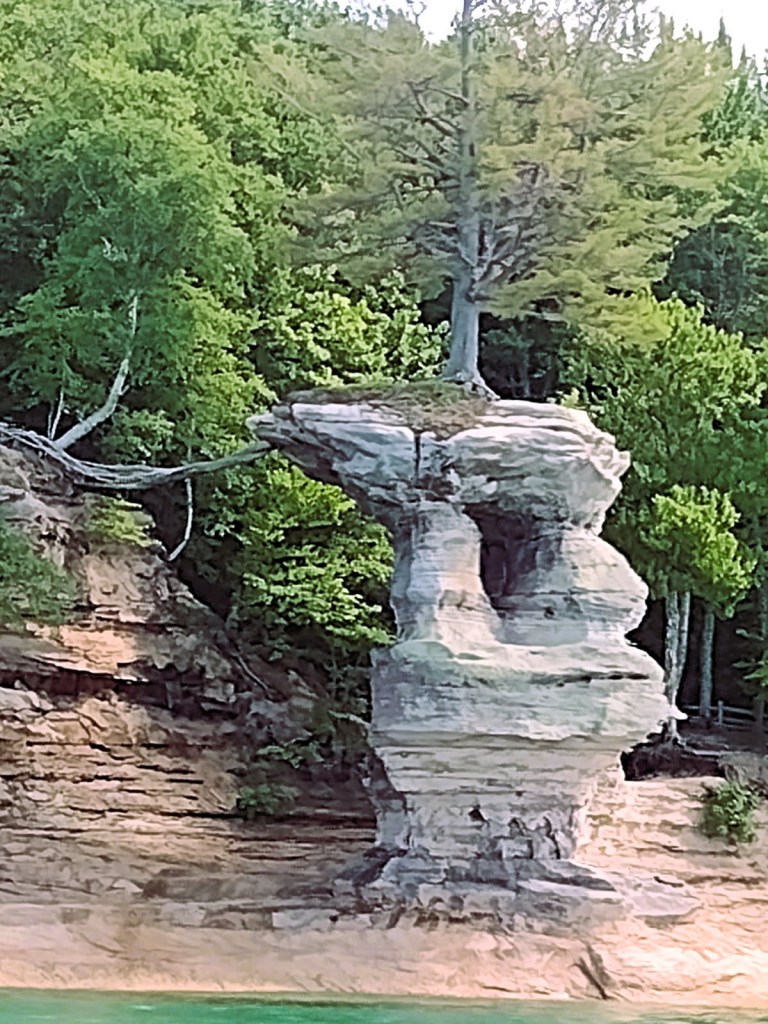
Though the white pine solidly crowns Chapel Rock, its roots don’t invisibly anchor it from underground like is the case with most trees. Rather, its root system is planted on the mainland, and since the archway that connected the rock and the mainland collapsed in the 1940s, the roots securing it are exposed. The odd sight reveals the marvelous growth of this network of roots that has preserved the tree for 250 years and kept it thriving in spite of its isolated location.
The image enforced the inescapable value of maintaining a connection to where you came from, whether you want to or not. Our root systems may differ in various ways from those of trees, but we still share many similarities. Like trees, we continue to grow in a healthy setting, if not physically but emotionally, and a lot of that growth is because of the base we had. As we do, we may well be inclined to venture away from our hometown, adopt different ideals, and/or set off on a different path from what we were accustomed to in our upbringing.
Unlike tree roots, our parents and those who raised us expect such changes and even count it as a success when they witness us making our own way. Akin to birds and other animals, they don’t want us to be forever dependent on them as we were during childhood and often encourage us to take productive steps toward that independence. Even if our parents by blood don’t fill that role, we all have guardians and/or mentors that foster those values in us.
At the same time, we can preserve our roots, regardless of where we may end up. Maintaining good relationships with those who nourished us and helped us blossom into what we are now can be like feeding off of that same life source that created us in the first place. In cases where that isn’t possible, such as when we lose loved ones in death, we can still draw off our memories with appreciation and remember the lessons and values they instilled in us.
Similar to the tree on Chapel Rock, we may encounter times when the ground beneath us slips away. On those occasions, our connection with our root system is especially vital. We can only imagine if that tree somehow severed itself from its roots and the outcome it would suffer, no doubt toppling long before now. Instead, it continues to stand as an example of resilience despite its unusual surroundings. Likewise, we’ll grow more resilient if we don’t just depend on ourselves to endure hardships but foster those invaluable bonds that will assist us in staying upright.
More is involved in human roots than tree ones, with us all having to navigate each other’s personalities and mistakes. Plus, not every root system looks the same, with family structures differing as mentioned above. Nonetheless, we all have somewhere we came from and hopefully someone who cultivated our cores and championed us. No matter what happens, we shouldn’t overlook that gift. Rather, we ought to take a moment, particularly during challenges, to reflect on those roots and rely on them to stabilize and ground us again.
 KarinaBartow.com