
We’ve all said it, “I’ve had enough!” Those words are usually followed by a rash chain reaction of one sort or another, an unraveling of pent-up emotions. While it may bring a sense of relief, if we’re being honest, it can lead to harm more times than not.
Like I explored in Should You Loath Your Limits?, we all have limits and can’t just ignore them. Limits can benefit us in teaching us our strengths and protecting us from harm, like brakes do for a vehicle. This is as true with emotional limits as it is physical ones. Each of us has a threshold of how much we can endure, and we shouldn’t resent that fact of life. Where it gets tricky, though, is identifying a healthy way to handle it when we feel maxed out.
Unlike with physical tests, we rarely can just stop emotional battles. We don’t have a built-in tap to allow the stress to drain out, either. We may be able to try avoiding certain triggers or step aside from unneeded tasks that prove too much for us, but stress in its plethora of forms always creeps at our heels. Many times, external factors cause it, over which we have no control. How can we determine the best coping mechanism for ourselves?
I recently heard a song my dad used to listen to a lot when I was a kid, Melissa Manchester’s “Don’t Cry Out Loud,” and I remembered how much the lyrics resonated with me even at a young age. I recall my feelings more than I do my thoughts, and I’m not entirely sure I understood why it connected with me the way it did then. In my reflection as an adult, however, I realize how that little girl embodied the tune’s message.
By no means was I perfect or the least bit quiet, but I took a lot of the byproducts of my disability in stride. The biases and accompanying mistreatment, the isolation of not being able to do what my peers could, and oh yeah, just the normal pressures of growing up. I lamented to my family and maybe a close friend, but I kept it inside and simply smiled at the rest of the world.
As a grown woman, I’ve let that guard down a couple of times and said, “I don’t have to take this anymore.” Culture in 21st century America encourages you to own your narrative and speak out against injustice, so that’s what I did. Did it help relieve the built-up pressures in me?
Sure, my actions gave me an initial sense of vindication, but both times, that proved to be fleeting. The implications were so much more severe and farther-reaching than I ever would have anticipated. I ended up bearing heavier pressure than I felt from the incident itself, only compounding my stress. What’s more, I didn’t stay true to my own standards, and that brought me the most pain.
Make no mistake; I firmly believe there are times to speak out and that staying silent will subject you to further suffering. It isn’t healthy to bottle up all your anxieties. Everyone needs an outlet, and that will vary from person to person. At the same time, what I’ve learned from these experiences is to weigh out the consequences of using a particular outlet. Involving others who you may not know very well can make a situation escalate far out of the proportions you originally intended. Before you realize it, you can go from being the victim to the perpetrator. At the start, you felt like you had enough, but now, you’re left with way fuller of a plate than you were carrying before.
What can we do, then, at these critical moments when the tension just seems too much to bear? As I said earlier, people have their own unique coping mechanism. It takes experience to find one that works for you…and what doesn’t work. The most important factor to consider is whether you’ll come away feeling refreshed or rejected. On top of that, ponder whether you’re staying true to yourself or conforming to somebody else’s mold.
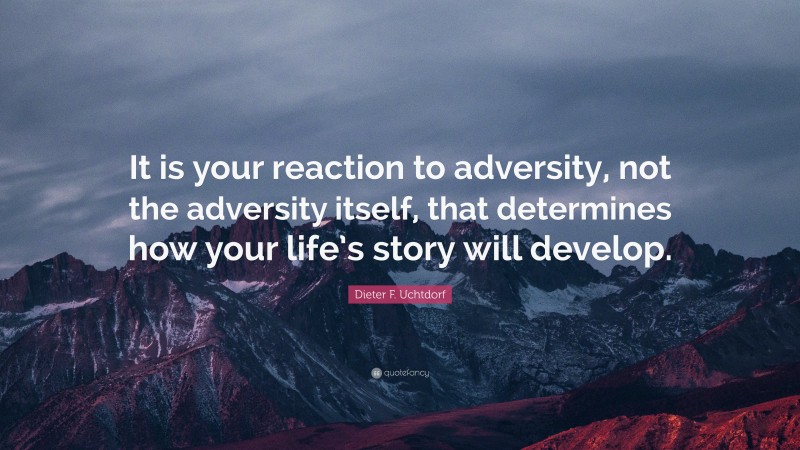
A famous quote tells us, “It’s your reaction to adversity, not adversity itself, that determines how your life’s story will develop.” More often than not, challenges and the way we face them play a major part in establishing our reputation. Unfortunately, those moments are usually when we feel the closest to our breaking point. When we encounter such, we ought to look ahead, not only at the consequences of unwise behavior, but also the benefits we’ll receive from handling our opposition in a graceful and dignified manner. That may alleviate some of our tension now, and once we get to the other side of the matter, we’ll maintain our good reputation with others as well as ourselves.
 KarinaBartow.com
One thought on “When Enough Becomes Too Much”