
2024’s top grossing animated film, “Inside Out 2,” was nominated for Best Animated Feature Film at Sunday’s Academy Awards®. The movie and its 2015 forerunner follows Riley and her many emotions as she grapples with changes that accompany growing up. Both movies do an excellent job of depicting the variety of emotions everybody faces, giving each emotion its own character to highlight how they can work together, both to our benefit and our detriment.
In “Inside Out 2,” a new emotion/character enters Riley’s mind, Anxiety. For much of the movie, Anxiety reigns supreme over Riley’s other emotions, clouding her world by its effects. Joy, who used to man the control panel of the girl’s outlook, fights to restore the balance Riley once enjoyed, but Anxiety doesn’t surrender easily.
While I watched the film with my nephew months ago, the plot fascinated me with how well it portrayed the impacts of a dominant emotion like anxiety. As of 2019, the World Health Organization estimated that 301 million people suffered from anxiety disorders, and trends suggest that the figure grew exponentially during the Covid pandemic. Even if you’re not diagnosed with a chronic condition, we all contend with anxiety in some form.
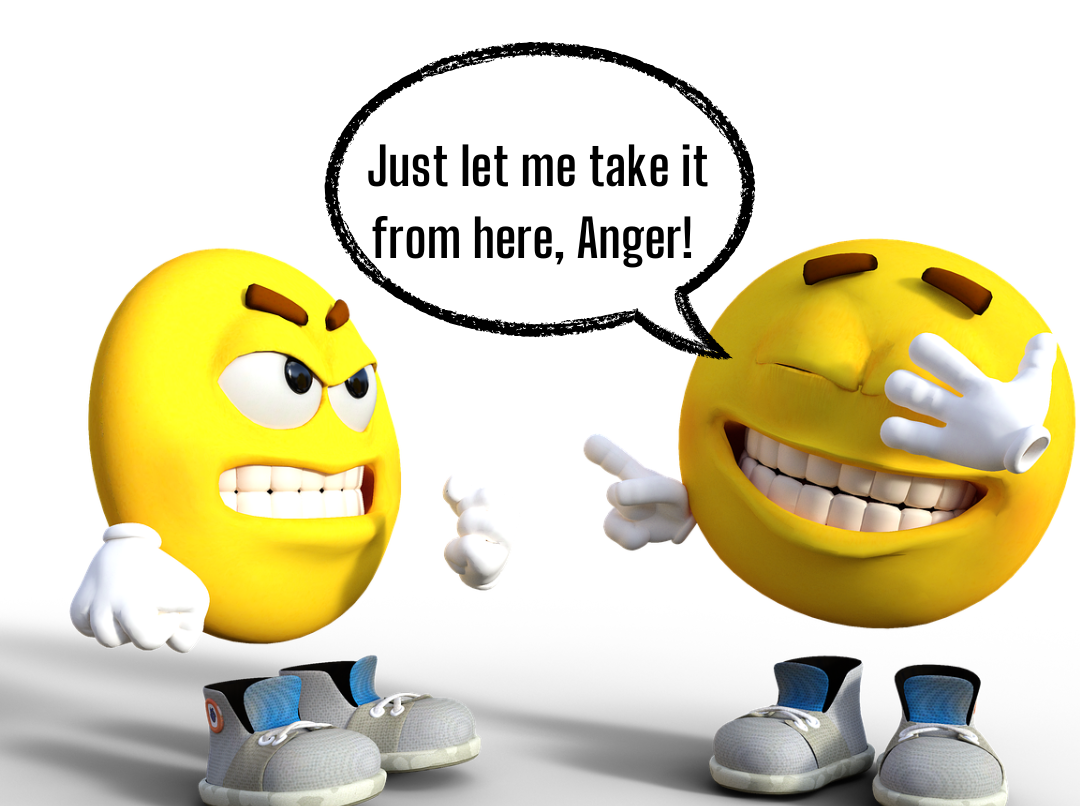
Anxiety isn’t the only emotion that can completely overtake our mentality and crowd out the rest. Another childhood classic, “Winnie the Pooh,” showcases how negativity can make even the brightest days seem bleak through gloomy Eeyore, who always has a rain cloud over his head. Anger, jealousy, and fear can dominate you in similar ways, but on the upside, positive attitudes like joy and courage can stamp out the others if you give them the controls.
We can’t get a window into our brains to observe the way our emotions interact like the “Inside Out” movies give us with Riley. True, we have the inside scoop since we experience it all, but we don’t always consider the reason we’re affected by things as we are. Sometimes, we might not even understand our reactions.
Still, there’s value in trying to identify the feelings that we’re allowing to control us. We often hear the phrase “an emotional reaction” in the context of an impulsive response, but in reality, each action we take starts with our emotions. If we’re content, peaceful, and happy, our responses will reflect that, even if we’re performing mundane tasks. If we’re filled with the negative emotions, they’ll likewise dictate what we do and the enjoyment we garner from doing them.
Once we determine the emotions that are pulling our metaphorical strings, we’re better equipped to either lean into them or fight them, if needed. If negativity consumes us because of emotions like anxiety or embarrassment, we could summon joy through a pleasant memory or activity. On the other hand, our positive emotions can work against us, possibly making us insensitive to others or making a mistake caused by overconfidence. In such cases, a measure of those negative ones, like shame or sadness, may help us remedy the situation and do better next time.
Since we don’t have that window Riley does, we usually need to find the right tools to discern what’s dominating us. Talking can be a good way to do so, as we might pinpoint our feelings easier by having to verbalize the matter at hand. Additionally, we receive input from the other person, which will give us a well-rounded perspective. To that end, we can also endeavor to look at our situation through an outsider’s eyes to realign our emotions.
When it comes to math, two negatives multiplied together equal a positive. While negative emotions serve a purpose, letting them compound won’t result in a positive outcome. Thus, when we find that our negative feelings are taking over the controls, we ought to recast them with the brighter ones to enter the scene.
“Inside Out 2” and “Winnie the Pooh” are trademarks of Disney Enterprises, Inc.
Also See
The Mental Work in Your Mental Wellbeing
 KarinaBartow.com
One thought on “The Emotion Commotion”