
November is National Family Caregivers Month. According to SAMHSA, “family caregivers are defined as family members or someone who is identified as ‘family’ who provide assistance and support to an individual with a chronic health condition–including mental health and substance use conditions, disability, or functional limitation.” Since I have Cerebral Palsy and have needed caregivers for my whole life, this subject is close to my heart.
I began this series last year and didn’t have plans to pick it up this month. However, developments in my life made me reconsider. In my previous installments (listed in the See Also section below), I discussed the need to compromise to help lighten the load of your caregivers. These adjustments evolve over time because of growing older and changing circumstances.
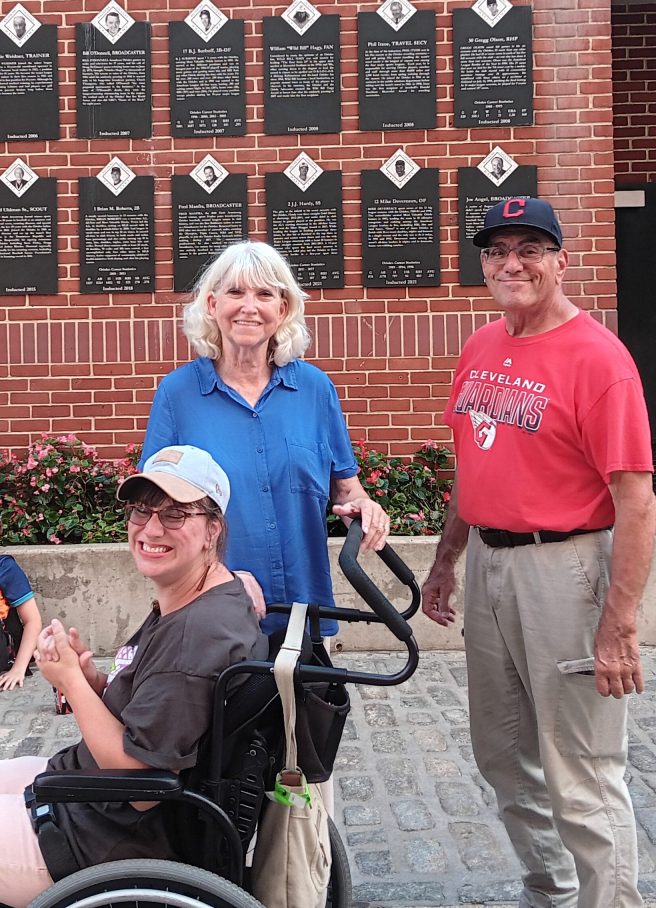
For the most part, my parents and I have been in a holding pattern for many years, accustomed to our routine that we established over much of my life. Father Time has crept closer and closer, though, endangering that smooth routine. My folks have both crossed the seventy-year mark and deal with the loss of strength and stamina that go with that. Additionally, my dad suffers from neuropathy, which makes it hard for him to feel his feet. Thus, my unsteadiness coupled with his lack of sensation of what is underneath him can make navigating stairs treacherous.
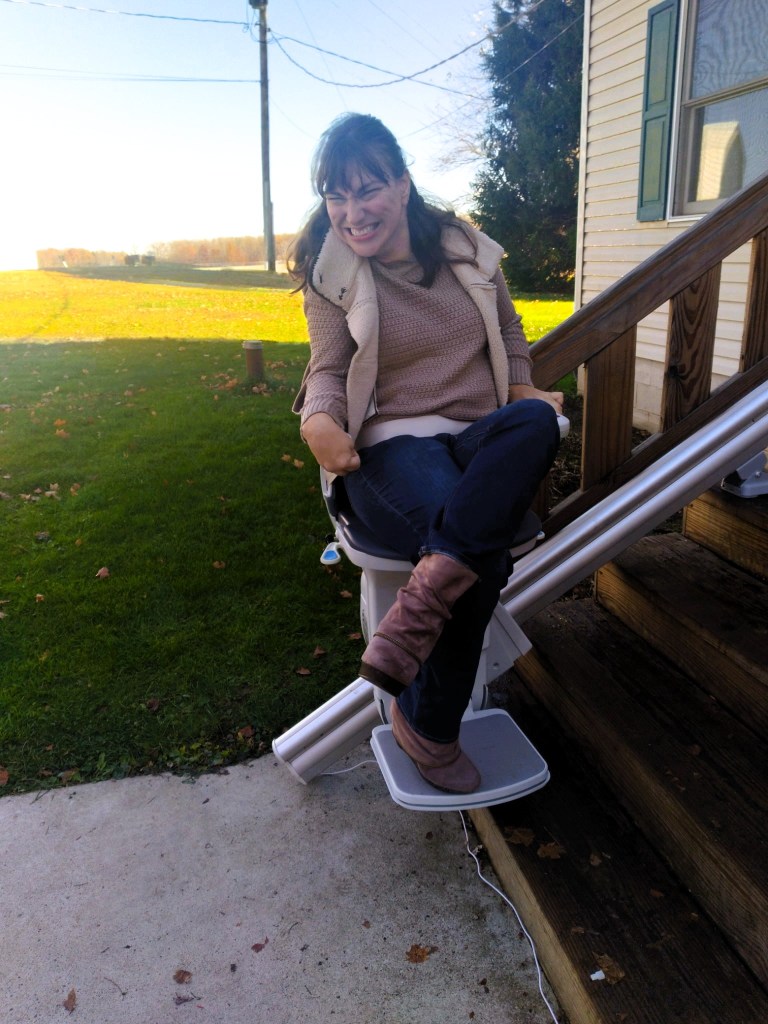
In light of a couple recent scares on our outdoor steps, we decided to add a stair lift to our deck. The modification isn’t something I welcomed, hating the stigmas and implications that come with it. Living in the same small community where I was raised, I didn’t want passersby to assume I was regressing. Of course, my body doesn’t perform the way it did when I was a teen, like nobody’s does as the decades progress. With my disability so publicly known, I’ve had a heightened perception of the way others view my condition. Along with that, I don’t like the thought of having to use something people don’t usually need until they’re double my age.
And don’t get me started on the slow speed! Apparently, nitro boosters aren’t available as an upgrade!
While I’m still not enthused about the idea, multiple conversations with my parents and friends have helped me make peace with it. I realize that this is another area where I have to put my caregivers ahead of my pride and preferences. All these years, they’ve gone to great lengths to keep me safe and in as good of shape as I can be, and this is my turn to do the same for them. Like I mentioned in the past, caregiving for a family member is still as much of a choice as it is to go into it professionally, and I want to make that choice one that they don’t regret.
That’s why gratitude plays a vital part in caregiving and care-living. It can be easy to begrudge your situation and sometimes even get frustrated with your caregiver because of your limitations. Gratitude for the care you’re receiving, however, mitigates that tension, shifting your focus from your needs to how they’re being met. And express that gratitude aloud. It may be a challenge to say “thank you” for every little way your caregiver assists you, but a regular habit of showing appreciation can go a long way to relieve their stress.
Another quality that has helped me through this transition and many others is humor. Having a disability creates various challenges and downright embarrassing circumstances, and taking them too seriously compounds the difficulties. Underneath the irritating surface, you can often find a way to laugh off the pain. After the initial wallowing I did about the stair lift, I took a more comical view of it, joking about how I can wear higher heels now without the fear of tripping down the steps. I also giggle at the vision of others—even my parents—using the addition.
Yes, caregiving and care-living call for many adjustments with time’s passing. But the adjustments mean your life hasn’t stopped. You continue to have places to go, even if your means of getting there is different. Sure, you’ll experience your share of downs, but with cooperation, love, and maybe even a stair lift, you can find your way back up!
Also See
Caregiving and Care-living: The Value of Teamwork (Part One)
Caregiving and Care-living: A Game of Compromise (Part Two)

